
Blog
How to Use a Juicer Step by Step (Easy Guide)

Quick answer
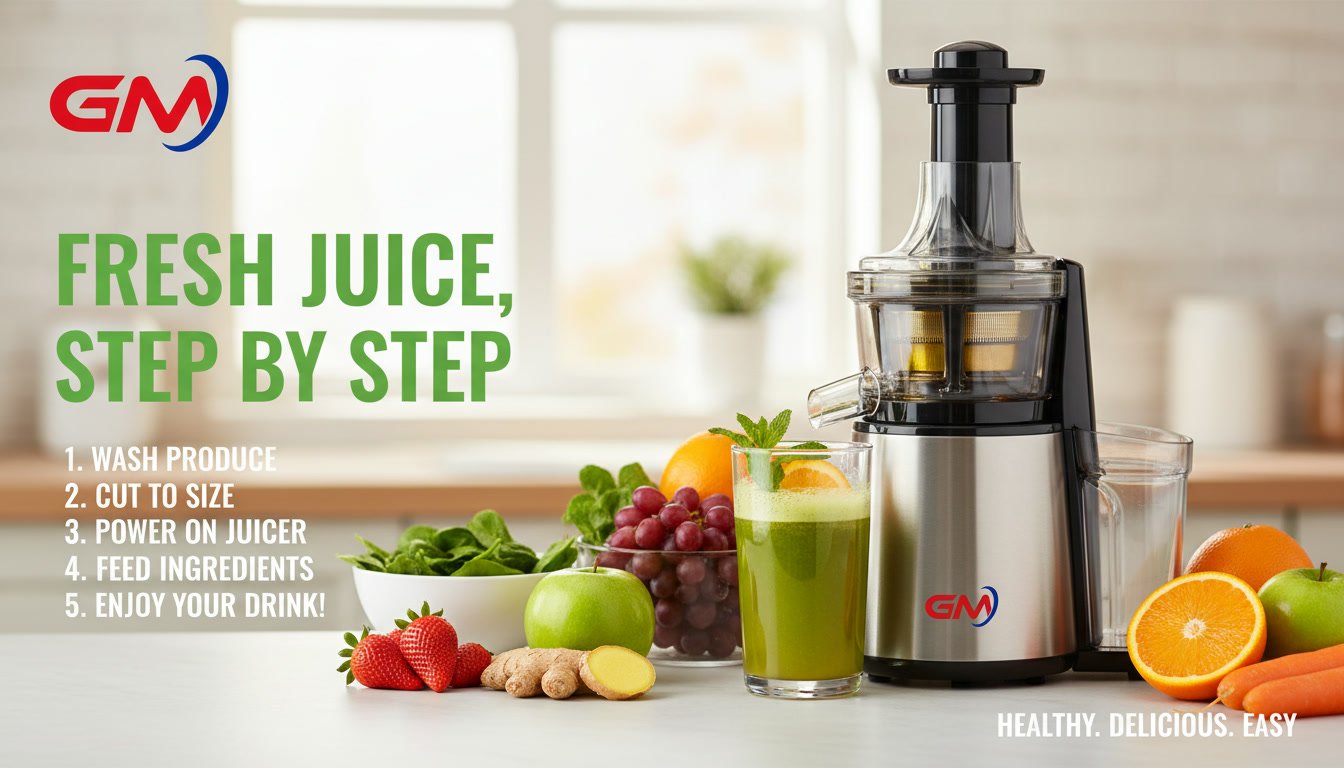
Wash your fruits, cut them small, assemble the juicer, and place a jug under the spout. Switch it on and feed the pieces slowly with the pusher. Clean all parts right after juicing.
What is a juicer?
A juicer is a kitchen appliance that squeezes juice out of fruits and vegetables. It separates the juice from the pulp (the fibre). Fresh juice gives you vitamins and minerals.
A blender is different. It mixes everything into a thick drink, while a juicer gives you thin, smooth juice.
Centrifugal juicer
Spins fast and works quickly.
Masticating juicer
Presses slowly and extracts more juice.
Citrus juicer
Squeezes oranges, lemons, and limes.
Know your juicer parts
Learn these seven parts first. Every step below uses them.
- Power button
- Starts the machine and sets the speed.
- Feed chute
- The tube where you drop the fruit.
- Pusher
- The plastic rod that pushes fruit down.
- Basin
- The chamber that crushes the fruit.
- Spout
- The nozzle where juice flows out.
- Juice jug
- Collects the juice.
- Pulp container
- Collects the waste fibre.
How to use a juicer: 10 easy steps
Follow the steps in order. Each one takes only a minute or two.
Read the manual
Every brand works a little differently. Check the parts list, the speed settings, and the safety notes. Look for the maximum running time too, so you do not burn the motor.
Wash the parts
A new juicer can smell like plastic. Wash the basin, strainer, lid, jug, and pulp container with mild soap and warm water. Dry them well. Do not wash the motor base in water.
Clean your work area
Place the juicer on a flat, dry surface near a power socket. Keep a knife, cutting board, glasses, and a spoon nearby. A clean counter keeps your juice safe and fresh.
Wash your produce
Rinse every fruit and vegetable under running water to remove dirt. Remove stems, leaves, and rotten spots, because they make the juice taste bad.
- Peel thick skins, like pineapple and orange.
- Remove hard seeds and stones, like those in peaches and plums.
Cut it small
Small pieces fit the feed chute easily and protect the blades. Cut apples, carrots, and cucumbers into thin strips or small chunks. Roll leafy greens, like spinach and kale, into small balls. This helps the juicer squeeze out more juice.
Assemble the juicer
Fix the basin, strainer, and lid in the right order. Lock everything in place. Most juicers will not start if one part sits loose.
Place the containers
Put the jug under the spout so the juice does not spill. Set the pulp container in its spot. Make sure both containers are empty before you start.
Switch it on
Plug in the juicer and press the power button. Select medium speed for most fruits. Use a lower speed for soft fruits, like grapes and berries. Use a higher speed for hard produce, like carrots and apples.
Feed slowly
Drop in a few pieces at a time. Press gently with the pusher and let the machine finish each batch. Never push hard, because it can damage the blades. Never use your fingers or a spoon inside the chute.
Check and finish
Look at the jug and the pulp container while you work. Switch off the machine and empty the pulp container when it fills. Strain the juice through a fine strainer for a smoother texture. Then drink it fresh, or store it in an airtight container in the fridge.
Best fruits and vegetables for juicing
Fruits
Oranges, apples, pineapples, grapes, berries, melons, and peaches.
Vegetables
Carrots, cucumbers, beets, tomatoes, kale, and mint.
Tip: Soft fruits like bananas and avocados do not juice well. Use a blender for them.
Dos and don’ts
Do
- Use fresh produce.
- Drink the juice right away, or store it in an airtight container in the fridge.
- Use leftover pulp in soups, puree, or baking.
Don’t
- Overload the juicer.
- Force big chunks down the chute.
- Run the machine for too long. The motor can overheat.
- Leave it running alone.
- Let children touch it.
How to clean a juicer
Clean the juicer right after you use it. Dried pulp is hard to remove.
- Unplug the juicer.
- Take the parts apart and empty the pulp container.
- Soak the parts in warm, soapy water.
- Scrub with a soft brush. Use baking soda and vinegar for tough stains.
- Wipe the motor base with a dry cloth. Never put it in water.
- Dry all parts and store them in a cool, dry place.
If a jar, blade, or jug cracks or wears out, replace the part instead of buying a new machine. Browse GM Group spare parts to find the right match.
Frequently asked questions
How do I use a juicer for the first time?
Wash the parts and assemble the juicer. Cut your fruits into small pieces and place a jug under the spout. Switch on the machine and feed the pieces slowly.
Which speed should I use on a juicer?
Use medium speed for most fruits and vegetables. It gives more juice and a smooth texture.
What is the difference between a juicer and a blender?
A juicer removes the pulp and gives thin juice. A blender keeps the fibre and makes a thick drink.
Can I make almond milk in a juicer?
Yes. Soak almonds for at least four hours. Add almonds and water in equal parts. The liquid that comes out is your almond milk.
Final words
Using a juicer is simple. Prepare your fruits, feed them slowly, and clean the machine after every use. Follow these steps, and you will enjoy fresh, healthy juice at home every day.