
Blog
Why Does a Sandwich Maker Heat Unevenly?

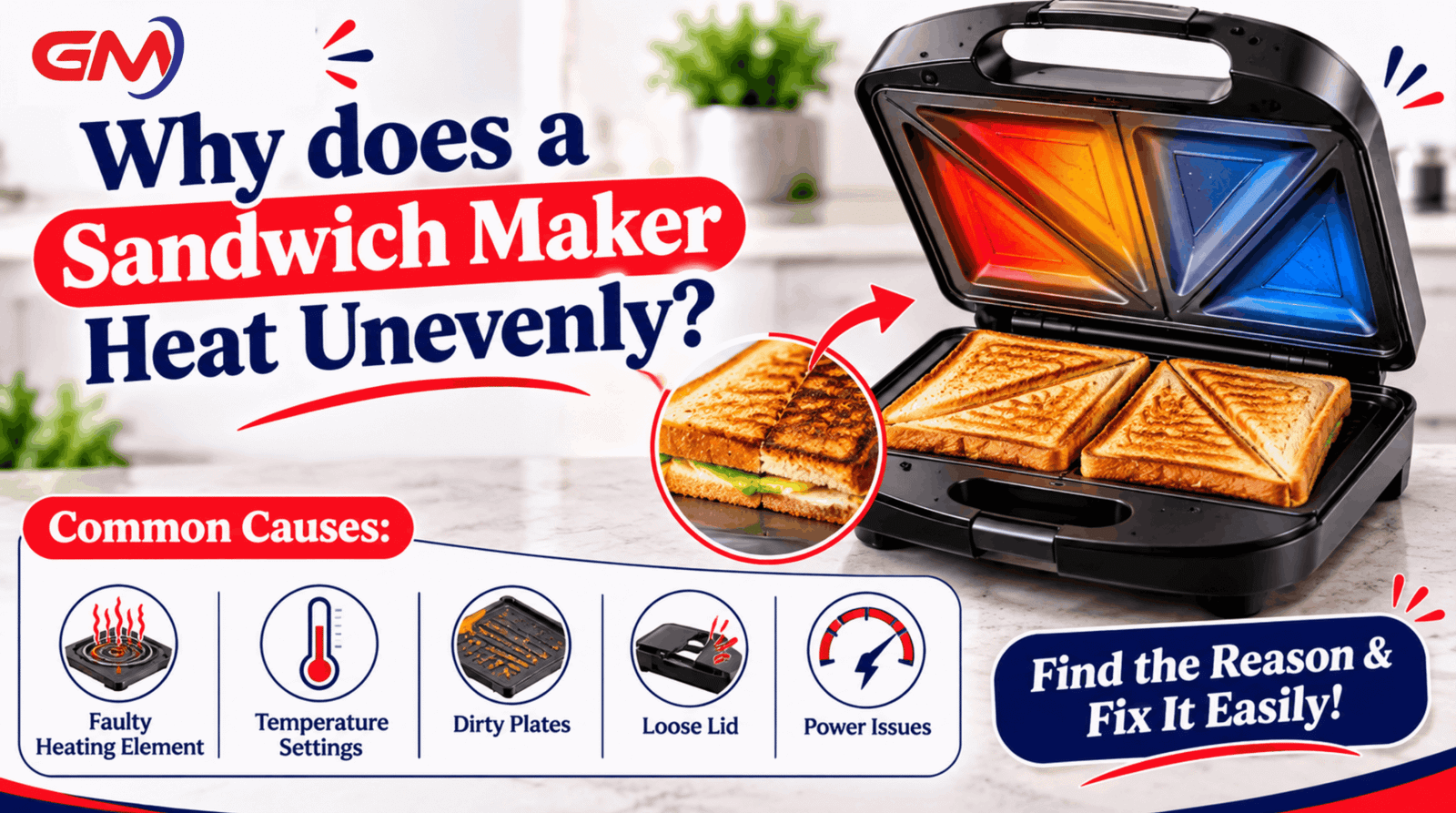
Quick answer
A sandwich maker usually heats unevenly because of burnt food on the plates or a failing heating element. Clean the plates first. If that does not help, check the coating, the lid and your power supply. If all are fine, the element is probably worn out, and replacing the unit is usually safer and cheaper.
Why does a sandwich maker heat unevenly?
One side golden, the other pale: it is frustrating, but the cause is usually simple. Work through these causes in order, starting with the easiest.
Cause 1: Dirty plates
Burnt cheese, butter and crumbs form a layer that blocks heat from reaching the bread, so some spots toast while others stay pale. To clean the plates:
- Unplug the sandwich maker and let it cool.
- Wipe the plates with a damp cloth.
- For stuck food, lay a damp paper towel over it for a few minutes. Then use a soft sponge and a little dish soap.
Tip: Never use steel wool. It scratches the non-stick coating. If your plates are beyond cleaning, browse sandwich makers with easy-clean non-stick plates.
Cause 2: Damaged non-stick coating
Look for scratches, peeling or bare metal. Bare metal heats faster than coated areas, so the sandwich gets dark and light patches. A light scratch is fine, but a badly flaking coating means it is time to replace the sandwich maker.
Cause 3: Power problems
If home voltage drops during peak hours, such as summer evenings when many air conditioners run, the heating element cannot reach full temperature.
- Change the time. If it heats evenly early in the morning or late at night, voltage is the likely cause.
- Use a voltage stabilizer to keep the supply steady.
- Check the plug. It should fit snugly. If wiggling it makes the indicator light flicker, the connection is loose.
- Inspect the cord. If it is frayed or the plug gets hot, stop using the sandwich maker at once.
Safety groups such as ESFI also warn against using damaged cords.
Cause 4: Faulty heating element or thermostat
If the plates are clean, the coating is fine and the power is steady, the problem is inside. The heating element is the wire that produces the heat. Over time, it can burn out in one spot, and that spot stays cool.
The safest test is the bread test. Heat the sandwich maker and toast two plain slices of bread. If the same part stays pale every time, that area is not heating. Do not touch the plates to check, because they get very hot.
A faulty thermostat makes it shut off too early. Loose internal wiring can also cause uneven heat.
Tip: Repairing an element, thermostat or wire means opening the housing, which is not safe without training. It usually costs more than a new sandwich maker, so replacement is the smarter choice.
Quick diagnosis guide

- Heats well at night only
- Voltage drop. Use a stabilizer.
- Same cool spot every time
- Worn heating element. Replace the unit.
- Top plate stays cool
- Lid not closing flat, overfilled sandwich, or a failing element.
- Sparks, burning smell or tripped breaker
- Electrical fault. Unplug immediately and stop using it.
Under warranty? Contact the seller before opening it, because opening it yourself usually cancels the warranty.
How to prevent uneven heating
Do
- Wipe the plates after every use.
- Brush on a little oil or butter first.
- Close the lid flat so the latch catches.
Don’t
- Use abrasive pads.
- Overfill the sandwich.
- Leave it on after cooking.
Do you need a new sandwich maker?
If yours is beyond fixing, choose one with a good non-stick coating and a sturdy hinge. The Sandwich Maker GL-3015 from GM Group runs on 220–240 volts, 50/60 hertz, and uses 750 watts, so it suits standard household outlets. Its non-stick plates are easy to clean, which helps prevent uneven heating.
Frequently asked questions
Why is my sandwich maker not heating evenly?
The most common cause is burnt food on the plates. Other causes include a scratched coating, low voltage, a lid that does not close flat, or a worn heating element.
Can I fix a sandwich maker heating element at home?
No. It means opening the housing and handling electrical parts, which is unsafe without training. A new sandwich maker is usually the better choice.
Why is the top plate cooler than the bottom plate?
Check that the lid closes flat and the latch catches. An overfilled sandwich can keep the top plate from touching the bread. If it stays cool with an empty, closed lid, the top element may be failing.
Final words
Clean the plates, check the coating, test the lid and plug, and rule out voltage problems. If none of that works, the heating element has probably worn out, and replacing the unit is the safest option.